
Travel notes
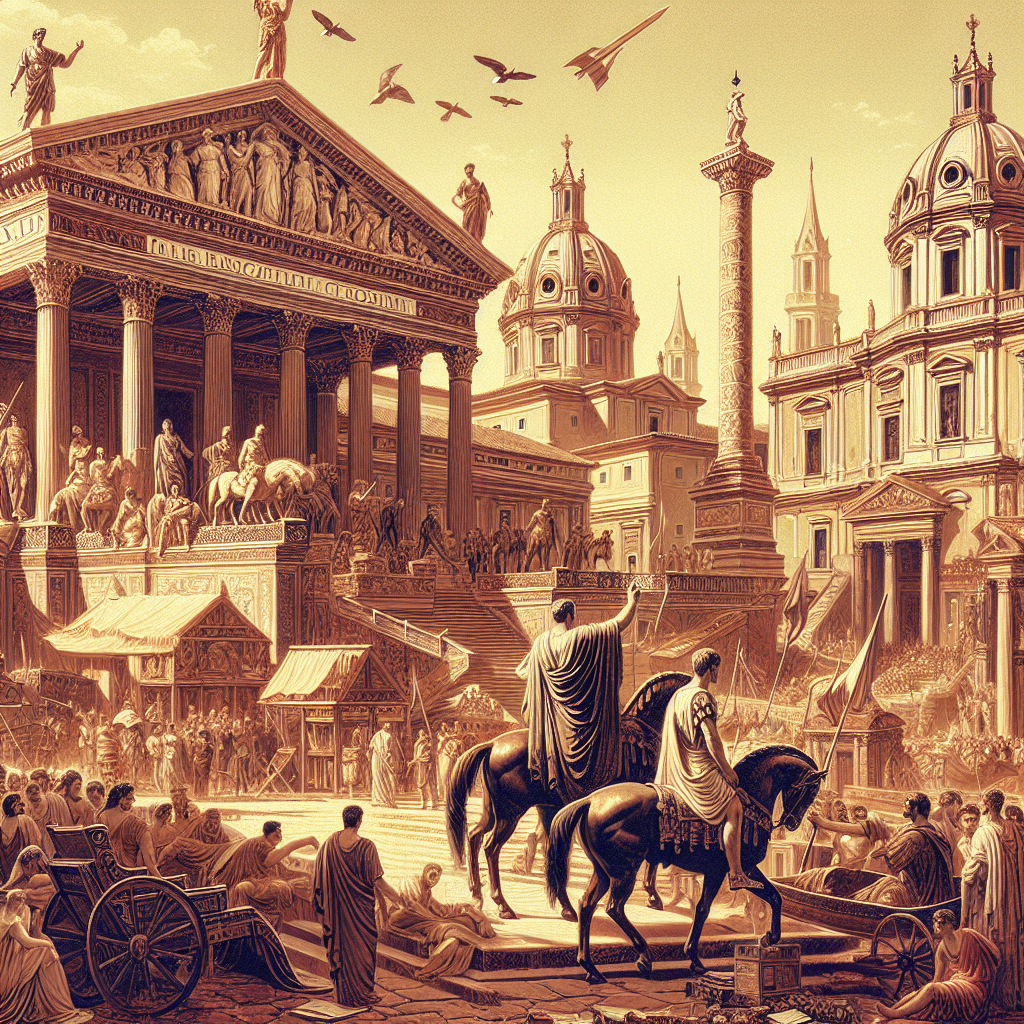
Julius Caesar: The Architect of an Empire and Rome’s Eternal Legacy 🏛️. Julius Caesar, a name that resonates through the annals of history, not merely as a figure of immense power and strategy but as the architect of the framework upon which Rome would build its eternal legacy. Born into a period of political turmoil and social upheaval, Caesar’s ascendancy to power was anything but assured. Yet, through his unmatched military prowess 🗡️, innovative reforms, and the sheer force of his will, he managed to change the face of Rome and, indeed, the Western world. Caesar’s military campaigns 🛡️ extended Rome’s boundaries far beyond the imaginable, securing vast territories and laying the groundwork for what would become the Roman Empire. His vision for Rome was grandiose, not just in terms of territorial expansion but in the restructuring of the Roman government and society. Through his Julian calendar 📅, a precursor to the modern calendar, he showed his commitment to not just the expansion of Rome’s borders but to the improvement of Roman life. However, Caesar’s rise was not without its detractors. His accumulation of power, culminating in his declaration as dictator for life, sowed the seeds of discontent among the Senate. This culminating tension led to his infamous assassination on the Ides of March, a moment that would forever change the course of Roman history. Yet, in death as in life, Caesar’s influence on Rome was indelible. The transition from the Roman Republic to the Roman Empire in the aftermath of his assassination set the stage for centuries of Roman dominance, influencing political theory, military strategy, and governance. Rome’s eternal legacy, with its complex blend of democracy and dictatorship, of military might and civil administration, bears the indelible mark of Julius Caesar’s vision. A vision that, despite the passage of millennia, continues to influence modern governance, law, and society. As visitors wander the ancient streets of Rome, they tread upon the paths shaped by Caesar’s ambitions and dreams, a testament to the enduring legacy of one of history’s most remarkable figures.
Travel notes:
📍 Location: Rome, Italy
🏛️ Key Landmarks:
– The Roman Forum: The heart of ancient Rome, where Julius Caesar’s indelible mark on the city can be best explored. Entry to the Forum allows you to walk the same paths that Caesar once did.
– 🚇 How to get there: Accessible via the Colosseo metro station.
– 🎟️ Price: A combined ticket including the Colosseum, Roman Forum, and Palatine Hill is approximately €16.
– The Theatre of Pompey: Though now in ruins, this was the site of Caesar’s assassination on the Ides of March. A pivotal location in Rome’s history, it’s a must-visit for history buffs.
– 📍 Location: Largo di Torre Argentina, Rome. This area is now an archaeological site and can be viewed from the surrounding streets.
– 🆓 Entry: Free.
As you wander through these ancient streets and landmarks, you are walking in the footsteps of Julius Caesar, experiencing the architectural and historical legacy that shaped Rome and the modern world. Each site offers a unique glimpse into Rome’s storied past, bringing history to life for its visitors.