
Travel notes
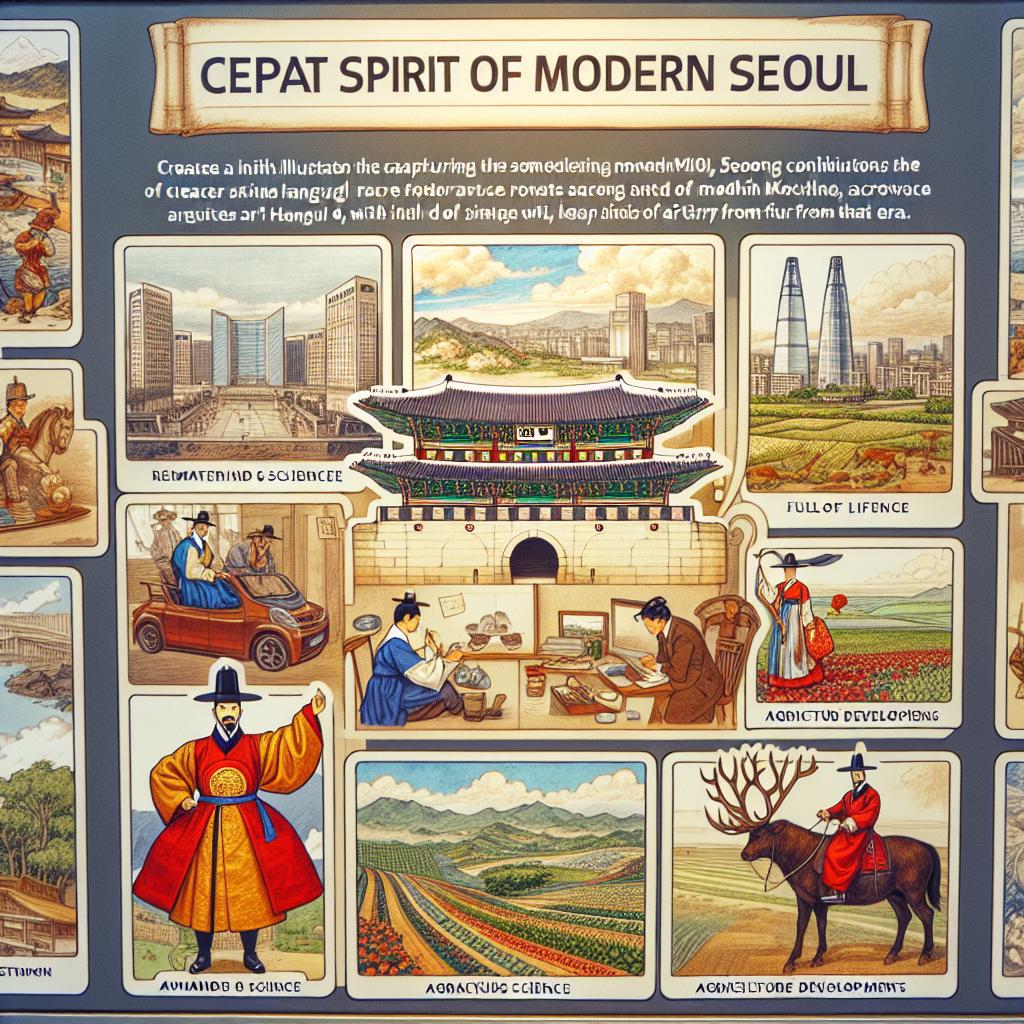
In the heart of Seoul, beneath the shadow of modern skyscrapers and bustling streets, lies the indelible legacy of King Sejong the Great 🏯, a ruler whose visionary leadership and profound contributions continue to resonate in the daily lives of South Koreans. Reigning from 1418 to 1450, King Sejong’s most remarkable achievement was the creation of Hangul, the Korean alphabet 📚. This groundbreaking system of writing was designed to be easily learned by all, breaking down the barriers of literacy that once confined knowledge and power to the elite. Today, Hangul is celebrated every year on Hangul Day (October 9), a testament to its enduring importance in Korean culture and identity. Beyond Hangul, King Sejong’s influence stretches into areas of science, technology, and agriculture. His establishment of the Hall of Worthies (Jiphyeonjeon) led to significant advancements in astronomy, calendar science, and meteorology, with inventions such as the rain gauge 🌧️, which modern Seoul continues to benefit from in its efforts to manage monsoon seasons. King Sejong’s reign also saw the development of improved agricultural techniques, which helped secure food resources for his people. A walk through modern Seoul reveals numerous tributes to King Sejong, from the grand statue in Gwanghwamun Square that serves as a popular meeting point 📍, to educational exhibits and cultural festivals that celebrate his legacy. As the city advances into the future, the principles and innovations of King Sejong the Great remain a guiding light, demonstrating that the wisdom and foresight of one leader can indeed shape the destiny of a nation for centuries to come.
Travel notes:
📍 **Location:** Gwanghwamun Square, Seoul, South Korea
🏯 **Key Landmarks:**
– **Statue of King Sejong the Great**: A grand statue located in the heart of Gwanghwamun Square. This iconic landmark serves as a tribute to King Sejong’s legacy and is a popular spot for both tourists and locals.
📚 **Cultural Significance:** King Sejong’s most notable achievement, the creation of Hangul, the Korean alphabet, is celebrated annually on Hangul Day (October 9). Events and educational exhibits around this time offer deep insights into the impact of King Sejong’s work on Korean culture and identity.
🚇 **Getting There:**
– The easiest way to reach Gwanghwamun Square is by subway. Take the Seoul Metropolitan Subway to Gwanghwamun Station (Line 5), Exit 9.
🎟️ **Price:** There is no entrance fee for visiting Gwanghwamun Square or viewing the Statue of King Sejong.
**Note:** While exploring the area, visitors will also encounter tributes to King Sejong’s contributions in science, technology, and agriculture. These include the Hall of Worthies (Jiphyeonjeon) and various inventions such as the rain gauge, which highlight the advancements made during his reign. To fully appreciate these contributions, consider visiting during cultural festivals or educational events that focus on King Sejong’s legacy.