
Travel notes
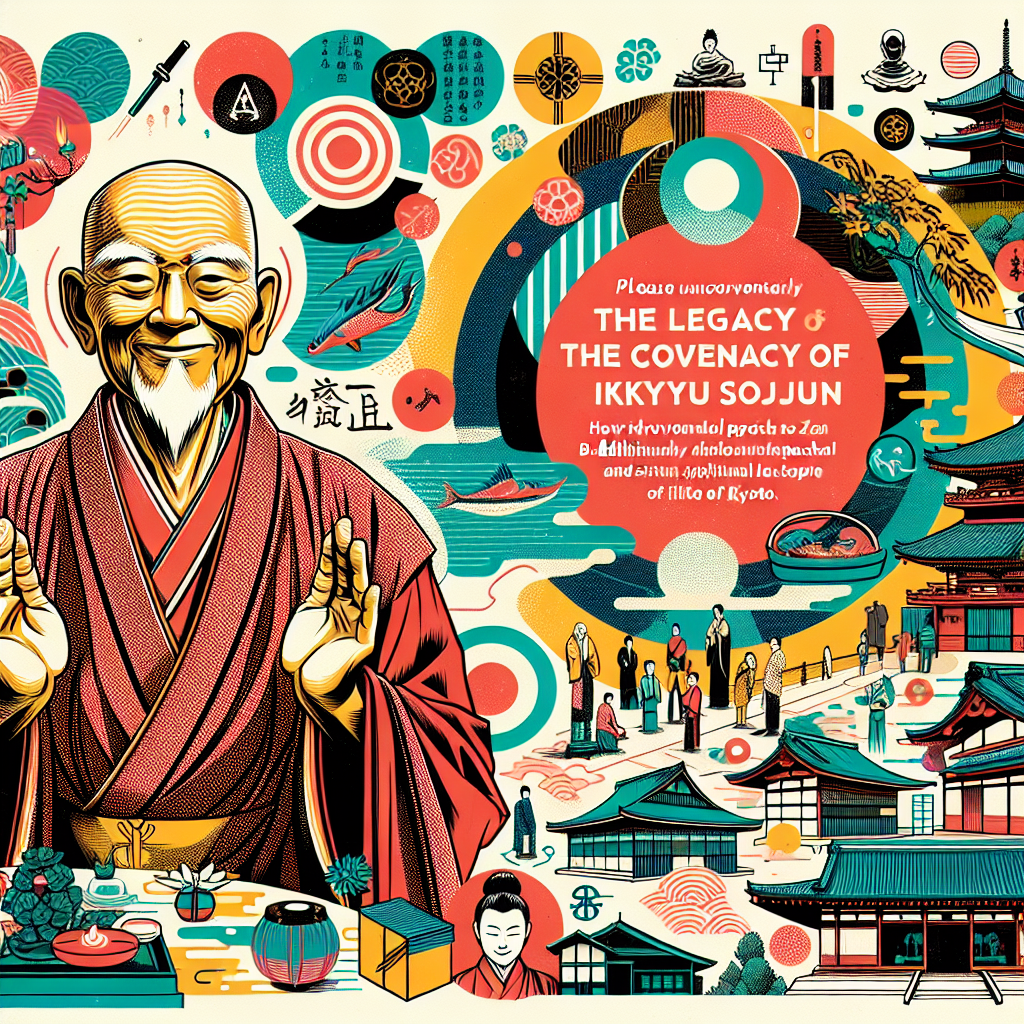
Ikkyu Sojun, a Zen Buddhist monk, left an indelible mark on Kyoto’s cultural and spiritual landscape. Born in 1394, his unconventional approach to Zen and life itself stirred the ancient city into a new awakening. Ikkyu’s journey from an orphan to becoming the abbot of Daitokuji Temple 🏯 showcases his profound impact on Kyoto’s Zen Buddhism. His teachings emphasized direct experience and the beauty in simplicity, influencing the Japanese tea ceremony 🍵, poetry, calligraphy, and even the way gardens were designed. Ikkyu’s love for life, with all its imperfections, made him a folk hero, embodying the essence of Zen’s adaptability and relevance. His legacy in Kyoto is not just in its temples and art but in the spirit of inquiry and appreciation for the moment that he championed. The city today, with its serene gardens, vibrant cultural scene, and deep spiritual roots, reflects the essence of Ikkyu Sojun’s teachings, making him a historical figure whose influence continues to shape Kyoto’s destiny.
Travel notes:
🏯 **Daitokuji Temple Complex**
– **Location**: Murasakino Daitokujicho, Kita Ward, Kyoto, 603-8231, Japan
– **Access**: Easily reachable by bus from Kyoto Station. Take the Kyoto City Bus number 205 or 206 and get off at Daitokuji-mae stop.
– **Entrance Fee**: Free for the temple grounds; individual sub-temples may charge an entrance fee ranging from 400 to 600 yen.
– **Notable**: As the abbot of Daitokuji Temple, Ikkyu Sojun played a significant role in the development of Zen Buddhism in Kyoto. Today, visitors can explore the temple’s vast complex, experiencing the tranquility and aesthetic simplicity that embodies Ikkyu’s teachings. The temple also houses stunning gardens and tea houses that reflect the influence of Zen on Japanese tea ceremony.
🍵 **Japanese Tea Ceremony Experience**
– **Location**: Various locations around Kyoto, including within Daitokuji Temple Complex.
– **Activity Price**: Prices vary by venue but expect to pay around 2,000 to 5,000 yen for a full ceremony experience.
– **Notable**: Influenced by Ikkyu Sojun, the Japanese tea ceremony is a must-do experience in Kyoto. It’s not just about drinking tea, but also appreciating the beauty in simplicity and the moment, principles that Ikkyu cherished.
While Ikkyu Sojun’s impact on Kyoto spans more than just these locations, visiting Daitokuji Temple and participating in a tea ceremony offer a direct connection to his life and teachings. His legacy also lives on in the city’s cultural scene, gardens, and the overall spirit of Zen that permeates Kyoto.